GPS Tracker Attachment Ideas for Kids, Pets, Seniors and Gear
Practical ways to carry a GPS tracker on a child's backpack or shoe, a dog's collar or harness, a senior's belongings and family gear, safely and comfortably.
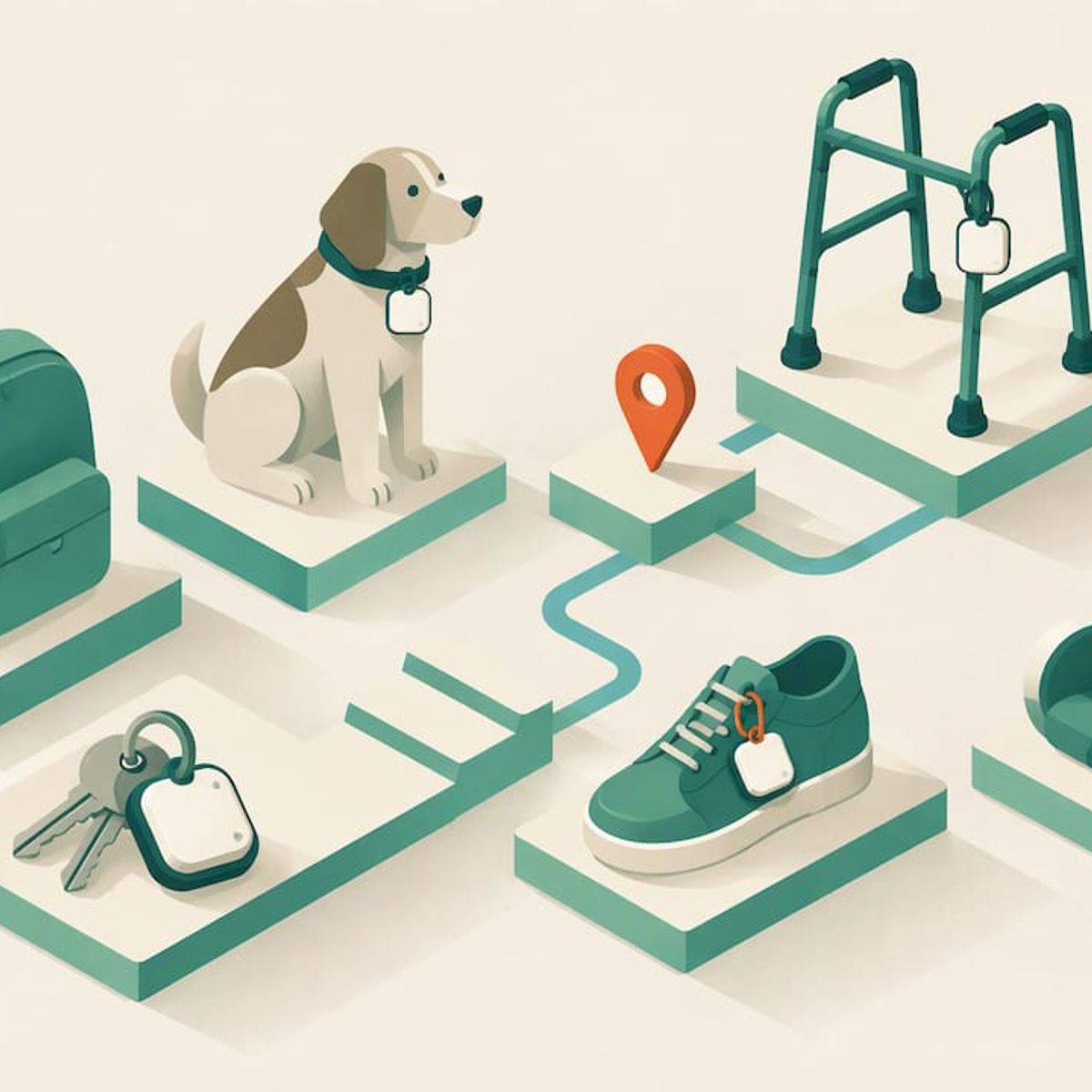
GPS Tracker Attachment Ideas for Kids, Pets, Seniors and Gear
The best place to attach a GPS tracker is wherever the person or pet will keep it with them without noticing: inside a zipped backpack pocket for a school-age child, on a flat collar or harness for a dog, in a coat pocket or bag for a parent or grandparent. Kin One is a single device that tracks kids, pets and parents on one map for a one-time $99, with no monthly fees, so the same attachment habits carry over from one family member to the next. This guide shows each placement, what to check before you rely on it, and where it goes wrong.
Kinwatchdog
Keep Loved Ones on One Map
Kin One tracks kids, pets and parents on one map, with real-time location updates and no monthly fees.
TL;DR
- Kids: use a zipped backpack pocket, a clip on the bag, or a shoe pouch for toddlers. Never put a cord or lanyard around a young child’s neck.
- Dogs: mount the tracker on a flat collar or harness strap, snug enough that two fingers still fit under the collar.
- Seniors: choose something they already carry every day, such as a coat pocket, handbag or walker bag, and agree on it together.
- Gear and outings: attach to bags and strollers only within the maker’s load limits, away from buttons, brakes and fold joints.
- Kin One is a $99 one-time purchase with lifetime network data, so you can move one tracker between uses without a subscription for each.
Table of Contents
- Start With the Question: Who Will Carry It, and for How Long?
- Attachment Ideas for Kids
- Attachment Ideas for Dogs and Cats
- Attachment Ideas for Seniors and Caregivers
- Attachment Ideas for Bags, Strollers and Gear
- A Simple Table: Where to Put It
- Keeping It Charged and Findable
- Privacy: Tell People They Are Being Tracked
- Our Perspective
- Kin One for Families Who Want One Tracker, Not Five
- FAQ
- Sources
Start With the Question: Who Will Carry It, and for How Long?
Most attachment ideas fail for one reason: the tracker ends up somewhere the person leaves behind. A tracker on a jacket is useless on a warm day. One on a wristband is useless if a child takes it off in the car. So before you pick an accessory, answer three questions.
- Will it be on them or with their things? A tracker on a backpack tells you where the bag is. Usually the child is attached to the bag, but not always.
- Can it be reached for charging? A tracker you cannot easily take out is a tracker that goes dead.
- Is anything about it a hazard? Cords, small detachable parts, sharp edges and pressure points matter most for young children and pets.
The ideas below follow those three tests. Placement is also half of how well tracking works in practice: a device buried at the bottom of a packed bag or covered by a thick winter coat is harder for you to read and harder for the child to remember.
Attachment Ideas for Kids
Toddlers and preschoolers: shoes and sealed pockets
Young children pull at things, chew on things and forget things are there. That makes a shoe the most practical spot. A guide to carrying trackers on children from a kids’ tracker-holder publisher suggests a pouch laced onto the shoe, or a shoe with a built-in compartment. Keep the tracker under the tongue or in a sealed pouch so a curious child cannot pull it out.
Two cautions apply at this age:
- No necklaces or lanyards. The U.S. Consumer Product Safety Commission has warned that strings, cords and necklaces can strangle infants, and its advice is never to tie items around a child’s neck. The same logic applies to a toddler wearing a tracker on a cord.
- Nothing small enough to swallow. If a clip, pin or case cover comes loose, a young child can put it in their mouth. Choose closures that need an adult’s fingers.
School-age kids: the backpack
For a child who walks to school or rides a bus, a zipped inner pocket of the backpack is the simplest option. A few details make it work:
- Put it in an inside pocket, not the outer mesh pocket where it can fall out or be seen.
- Keep it away from food, water bottles and anything that leaks.
- Avoid the bottom of the bag where heavy books press on it.
- Pick a spot you can describe in one sentence so the child, a teacher or you can find it fast: “the small zip pocket against your back.”
A clip on the bag strap or a zipper pull also works, but it is visible. Be honest with yourself about the tradeoff: you are tracking the bag, and the child has to keep the bag with them. For a ten-year-old who sets it down at friends’ houses, that is a real gap, and a pocket-based option on the body may serve better.
Tweens and teens: pockets, belt loops and bag pockets
Older kids will not wear anything that looks childish. They will carry a small device in a jacket pocket, a bag, or clipped inside a waistband. The rule is that it has to be their choice, within limits you agree on. Teens in particular respond better to “here is what you can see and when” than to a device slipped into their things. Our page on GPS trackers for teens covers how families set this up.
Sensory-friendly options
Some children dislike anything dangling, tight or scratchy. A soft pouch on a belt or waistband, or a small sleeve that sits inside a bag pocket, avoids both the texture problem and the temptation to fiddle. Keep the edges smooth and test it on the child for a day before school starts.
Camp, field trips and travel
When kids are away with other adults, the tracker should be named, packed and easy for a counselor to find. A summer camp packing list is a good template for what to label and where to stash small valuables so they come home with the child. Tell the child, and the adult in charge, where the tracker lives.
For everyday school and activities, see GPS trackers for kids.
Attachment Ideas for Dogs and Cats
Collar: flat, snug and visible
For most dogs, the collar is the natural home. Do it right:
- Check the collar first. You need a flat, straight stretch of collar wide and thick enough to hold the mount without twisting.
- Center the tracker under the chin or at the side, not where it swings into the dog’s chest or the leash clip.
- Check the fit. You should be able to slide two fingers under the collar. Too loose and the tracker rotates and snags. Too tight is a comfort and safety issue. We walk through the check in how to attach a tracker to a dog collar safely.
- Recheck weekly. Fur, swimming and growth change the fit.
Our GPS tracker collar for dogs page covers attachment, fit and why there is no monthly fee.
Harness: for pullers and escape artists
If your dog slips a collar or pulls hard, a harness spreads the load across the chest and shoulders. Attach the tracker to a strap that lies flat against the dog, away from the buckle and the leash ring. Our guide to attaching a tracker to a dog harness shows which strap works best.
Small dogs and cats
Size and weight matter most here, because a heavy device on a small neck is uncomfortable. Our pages on GPS trackers for small dogs and GPS tracker collars for cats cover weight, breakaway collars and the chip.
Keep the ID tag and microchip
A tracker is not a substitute for identification. The American Veterinary Medical Association notes that a pet microchip is not a GPS device and cannot track your animal, which is exactly why the two work as a pair: the chip identifies your pet permanently, and the tracker shows where they are right now. Keep a tag with your phone number on the collar too.
For the full range, see GPS trackers for dogs and pets.
Attachment Ideas for Seniors and Caregivers
The best option for an older parent or grandparent is the one they already do: they carry a handbag, wear a coat, use a walker or cane bag, or keep keys in a pocket. Put the tracker where that routine already exists.
- Coat or jacket inner pocket, for people who wear one outdoors most of the year.
- Handbag or tote, in a zipped compartment, with a reminder to move it when they switch bags.
- Walker or wheelchair pouch, attached so it does not touch wheels, brakes or folding hinges.
- Keychain pouch, for people who never leave without their keys.
The point that matters most is agreement. Talk it through, explain what you can see, and let them help choose the spot. A tracker that is accepted gets carried. Our guide to senior safety technology covers how families approach this, and the page for GPS trackers for seniors shows how it fits caregiving.
Attachment Ideas for Bags, Strollers and Gear
On family outings, a tracker on gear gives you a second layer: if a bag, a stroller or a cooler goes missing in a crowd, you can see where it is. Placement rules are straightforward.
- Use cases with straps. Small cases with a twist-lock and an integrated strap can attach to bags, water bottles and bikes that have no pocket or slot for a tracker. Choose a closure that cannot open when the bag is dropped.
- Stroller organizer, not the handlebar. Keep the tracker in a stroller pocket or organizer rather than hanging from the frame, and never let it press buttons, release levers, cables or brake parts.
- Respect the load limit. Weight on a stroller handlebar can tip it. Keep the stroller’s manual in mind, and put heavy items in the storage basket.
- Recheck after folding. Fold hinges can crush or loosen a mount. Open the stroller and look every time.
- Car seats. Do not add anything to a car seat harness or shell that the manufacturer has not approved. If you want a tracker in the car, keep it in a bag or the glove box, not on the seat.
Not every item needs a tracker. The ones worth tracking are the ones that are expensive to replace or that carry something essential: a diaper bag, a backpack with medication, a hiking pack, a day bag at a theme park.
A Simple Table: Where to Put It
Who or whatBest placementAvoid
Toddler
Shoe pouch or sealed shoe compartment
Necklaces, lanyards, loose small parts
School-age child
Zipped inner backpack pocket
Outer mesh pockets, bag bottom
Teen
Jacket pocket, bag pocket, agreed together
Hidden placement without telling them
Dog
Flat collar section, two-finger fit
Loose collars, dangling mounts
Cat
Breakaway collar, light device
Non-breakaway collars
Senior
Coat pocket, handbag, walker pouch
Anywhere they will forget to move it
Stroller
Organizer pocket
Handlebar loads, brake or fold areas
Keeping It Charged and Findable
A tracker that sits dead in a pocket is not a tracker. Build a routine around charging that matches how the device is carried:
- Pick one charging time per week that matches a household habit, like Sunday evening.
- Keep the charging port easy to reach. If you have to dismantle a pouch or pull a collar apart, you will skip it.
- Keep the device out of high heat, such as a car dashboard in summer, and away from wet compartments.
- Look for sharp edges, crush points and pressure points where the tracker presses on skin. Comfort is a safety issue, because a child or pet will remove what bothers them.
Our family safety checklist turns this into eight setup steps for kids, pets and caregivers.
Privacy: Tell People They Are Being Tracked
Attachment ideas should never turn into hiding a tracker on someone. Sewing a device into a teen’s jacket without telling them, or slipping one into an adult’s bag, can damage trust and, depending on your state, may break the law. Laws on tracking another person differ by state, so if you are unsure, ask a licensed attorney in your state before tracking anyone other than a young child or a pet you own.
Good habits are simple:
- Tell kids what you can see and why.
- Agree with seniors on when and how location is shared.
- Review who has access to the map and remove people who no longer need it.
Kin One is built with privacy in mind: it has no audio monitoring and no onboard camera, and it gives you route deletion and user-managed visibility.
Our Perspective
Every family we talk to has the same problem: the tracker is only as good as the place it sits. A great device taped to the wrong strap protects no one.
That is why we built Kin One as one device for the whole family. The same tracker can go on a dog’s collar on Saturday, in a child’s backpack on Monday and in a parent’s coat on a trip, and you see them all on one map. Because there is a single $99 purchase with lifetime network data and no monthly fee, you do not pay again every time you add someone to the map.
We also chose what to leave out. No microphone, no camera. You get live location, arrival and departure alerts, up to five approved emergency contacts and privacy controls you manage yourself, backed by a two-year warranty.
Pick the placement, tell the person it is there, and keep it charged. The rest is peace of mind.
Louis
Kin One for Families Who Want One Tracker, Not Five
Kin One is a one-time $99 purchase: a GPS tracker and app that show kids, pets and parents on a single map, with live updates, arrival and departure alerts and up to five approved emergency contacts. There are no monthly fees and the network data is for life.
You can see what fits your family on the Kin One page, or read how live updating works and what to check in a tracker with no monthly fee. If you are comparing how a tracker is worn, our page on watch, collar or lanyard options explains it.
FAQ
Where is the safest place to put a GPS tracker on a young child?
Inside a zipped backpack pocket or in a shoe pouch or compartment, where it cannot be pulled out or mouthed. Never use a cord or necklace around a young child’s neck, because the CPSC warns that cords can strangle small children. Check the placement weekly.
Can I use the same tracker on a dog and a child?
Yes, as long as you attach it appropriately each time and remember to move it. Kin One is designed for kids, pets and parents on one map. For a dog, use a flat collar or harness strap with a snug fit. For a child, use a backpack pocket or similar.
Do I still need a microchip and ID tag if my dog wears a tracker?
Yes. A microchip is permanent identification and cannot track your pet, as the AVMA explains. The tracker shows location. Together they cover both finding and returning a lost pet.
Is it legal to put a tracker on someone without telling them?
Laws vary by state, and secretly tracking another adult can be illegal. The better approach is to tell the person and agree how location is shared. For legal questions about your situation, speak to an attorney in your state.
How often should I check the attachment?
Once a week is a good habit, and always after washing, swimming, folding a stroller or changing bags. Look at fit, closures, wear and charge level.
Sources
- AirTag Holders for Kids: Every Type Compared
- Strings, Cords and Necklaces Can Strangle Infants (CPSC)
- Microchipping: FAQs for pet owners (AVMA)
- This $4 Belkin Case Adds a Strap to Your AirTag (How-To Geek)